
Okay, so there's this weblog: http://stuffwhitepeoplelike.org
It's basically a site that makes fun of the stereotypical white person. Take a look at it if you want. I think it's funny....but is it offensive?
At first glance, one might think that it's "okay" to make fun of white people because hey, they haven't suffered the inequalities that other races have. Making fun of them is just harmless fun.
But I thought about it and I don't think it's fair to make fun of someone even though it's not based on years of oppression or injustice.
Maybe stereotyping of this kind is harmless if it's taken ironically by all parties involved (the joke bieng how obviously racist and ridiculous said stereotyping is) but that can easily be misconstrued and taken literally under the former context. (it's okay to make fun of white people)
Honestly, there would never be a weblog called "stuff black people like" because...wow. But THIS blog has been made....and it seems just as bad to me.
I dunno, maybe I'm suffering from "non-white guilt" (i.e. I'm just as bad a racist white person back in the day, only worse because we all should know better)
What do you all think?
Friday, February 15, 2008

Friday, February 1, 2008
The Big One
What does moral behavior look like to you?
The difficulty of defining "morality" is an issue that I think is taken for granted entirely too often. We discuss what is "right" in abstract, complicated terms and at the same time make quick snap judgements about what behaviors are right and wrong.
Often, identifying moral or immoral behavior seems to be an easy task. We think of issues like "it's wrong to steal and murder" as good examples of how you really don't need a complicated, concrete definition in order to live well and be a good person.
But there are times when one person's obviously right behavior seems much less obviously right to the rest of us. A man from Borneo was interviewd for NPR today and said that people should uphold their traditions. While that may not strike you as a moral statement, I think it indeed is. Saying what we should or should not do is a moral judgement about what is right and wrong. Even "I think" statements regarding optimal human behavior are assertions about morality.
So, what do you think of morality? Is it a feeling? A philosophy? Is it a truth and we're just trying to define it, or is it a construction that we devise to help ourselves live?
How important is it to be moral?
Are there things outside the bounds of moral judgement; can there be things that are too subjective for a moral assessment to be made?
The difficulty of defining "morality" is an issue that I think is taken for granted entirely too often. We discuss what is "right" in abstract, complicated terms and at the same time make quick snap judgements about what behaviors are right and wrong.
Often, identifying moral or immoral behavior seems to be an easy task. We think of issues like "it's wrong to steal and murder" as good examples of how you really don't need a complicated, concrete definition in order to live well and be a good person.
But there are times when one person's obviously right behavior seems much less obviously right to the rest of us. A man from Borneo was interviewd for NPR today and said that people should uphold their traditions. While that may not strike you as a moral statement, I think it indeed is. Saying what we should or should not do is a moral judgement about what is right and wrong. Even "I think" statements regarding optimal human behavior are assertions about morality.
So, what do you think of morality? Is it a feeling? A philosophy? Is it a truth and we're just trying to define it, or is it a construction that we devise to help ourselves live?
How important is it to be moral?
Are there things outside the bounds of moral judgement; can there be things that are too subjective for a moral assessment to be made?
Monday, December 31, 2007
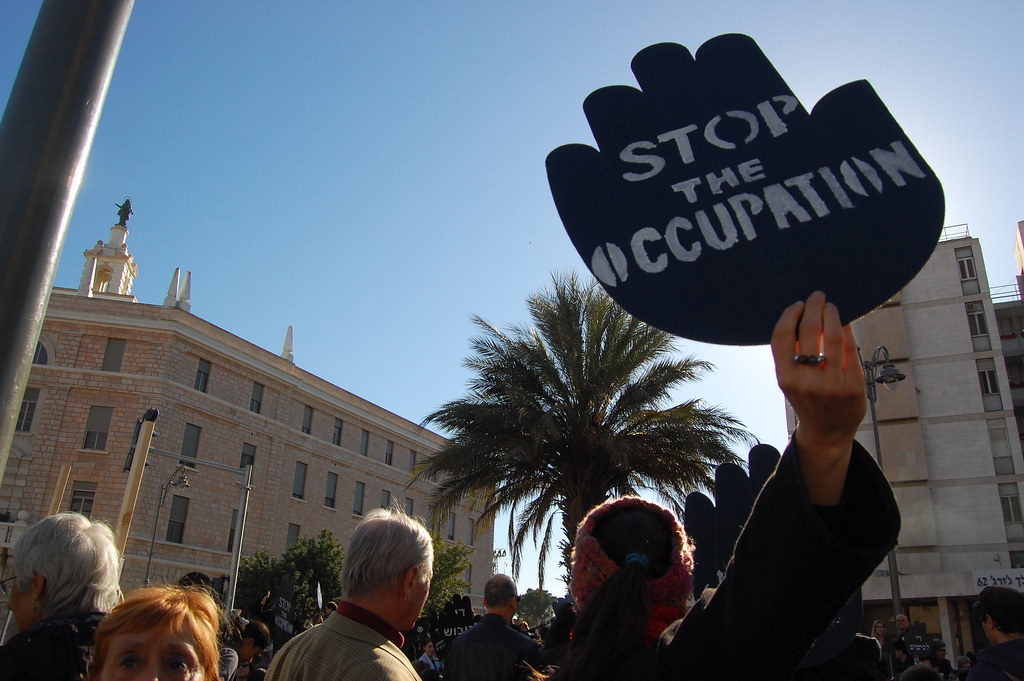
the palestinian situation

i spent christmas break in palestine and in jerusalem (israel). (bethlehem, ramallah, jericho, and jerusalem) while there i witnessed the absurd suffering of the palestinians, and the absurd rule of the israeli government. on relating some simple stories to some friends back home (like: palestinians have to have different color license plates, and have to drive on different, unpaved, 5x as long roads to get from point a to b. they cannot visit jerusalem without a permit, and if they are also muslim (many palestinians are christian) they cannot visit jerusalem at all, and so on) my friends said they had never heard of these injustices towards the palestinians. they are in essence treated as second class people, denied many civil liberties, and are quite desperate for liberty and peace.
my question is: what do you know about the situation? and how did you learn about it?
i am curious if your experiences from: academia, the news media, or the internet has shaped your views on israel/palestine, and how?
Thursday, December 6, 2007
Sentience and Robots
So, over dinner last night Vince brought up a concept that he's planning to fill out into a concept album/EP. One which I fully support and will spend good chunks of time daydreaming about: Sentience in robots, and what that would sound like.
My post is brief because my question is thus: what are interesting nuances and themes Vince can use?
Such hits have included:
My post is brief because my question is thus: what are interesting nuances and themes Vince can use?
Such hits have included:
- At what point would robots be too similar to humans?
- Conscious "othering" of robots
- Anthropomorphizing robots
- What does switching on / shutting down feel like?
- How does a robot mature? Are there noticeable changes? And would the robot be aware of this?
- Given the sudden self-awareness of said robot, what kind of issues might it have?
Friday, November 9, 2007
Progressive
This has been bugging me since the middle of college, and I find that every time I hear about Congressional conflict or Pakistani strife or donate a dollar to a food service at the super market I'm reminded of it.
What is the goal at the end of social activism? What do we want the world to be like?
And don't you dare give me an answer that begins and ends with "equality" or "and end to hunger". Does equality mean we try to dissolve cultural differences? Does an end to hunger mean global Communism? I want to know what you really think the best possible world would be like.
For example, I was thinking about Heaven. People sometimes point out that Hell sounds much more interesting than Heaven. Eternity wihout conflict sounds very boring. Similarly, I wouldn't wish for a world without pain or strife, as those things are essential to understanding ourselves, and are valuable experiences.
But, if pain and suffering are valuable, why change the way things are?
Well, I think pain is valuable, but suffering less so. Something of an ideal world would be a place where we are free to have all sorts of experiences, all sorts, but there is always hope and the sense that they will not last forever (and indeed they would not). The tragedy of poverty is that it is so difficult to overcome. Starving children will die and not have a life. The cessation of suffering is the most important thing in the world, but the absence of any suffering is the absence of part of our human identity.
So, take any topic, be it racism, poverty, ignorance, boredome, consumerism, whatever, and try to imagine what you REALLY want the world to be like. When you say "I want to make a difference", what is it that you're striving toward.
What will the world look like when we decide we can stop trying to change it?
What is the goal at the end of social activism? What do we want the world to be like?
And don't you dare give me an answer that begins and ends with "equality" or "and end to hunger". Does equality mean we try to dissolve cultural differences? Does an end to hunger mean global Communism? I want to know what you really think the best possible world would be like.
For example, I was thinking about Heaven. People sometimes point out that Hell sounds much more interesting than Heaven. Eternity wihout conflict sounds very boring. Similarly, I wouldn't wish for a world without pain or strife, as those things are essential to understanding ourselves, and are valuable experiences.
But, if pain and suffering are valuable, why change the way things are?
Well, I think pain is valuable, but suffering less so. Something of an ideal world would be a place where we are free to have all sorts of experiences, all sorts, but there is always hope and the sense that they will not last forever (and indeed they would not). The tragedy of poverty is that it is so difficult to overcome. Starving children will die and not have a life. The cessation of suffering is the most important thing in the world, but the absence of any suffering is the absence of part of our human identity.
So, take any topic, be it racism, poverty, ignorance, boredome, consumerism, whatever, and try to imagine what you REALLY want the world to be like. When you say "I want to make a difference", what is it that you're striving toward.
What will the world look like when we decide we can stop trying to change it?
Tuesday, October 30, 2007
GETTING WHAT YOU WANT/ARE ENTITLED TO
So I received a call at work the other day from a guy who was very upset that I couldn’t help him. He told me he was “visually impaired” and went on about how I was being unfair to him, all the while dropping phrases like “Lawyers” and “Americans with Disabilities Act” whenever I suggested all the alternative ways I could accommodate him. Obviously fed up with my inability to give him exactly what he wanted, he asked to speak to my manager.
NOTE – the reason I couldn’t help this guy had nothing to do with company policy, etc. I tried to do everything in my power to help him. But in order to give him what he wanted, I would’ve had to have taken something from another customer.
My manager essentially told him everything I did and he then reiterated the illegality of our inability to help him, again citing that visual impairment was a disability covered in the “Americans with Disabilities Act.” He then asked to speak to her manager. At which point, I lost track of the conversation.
It struck a chord with me and my co-workers because we see and hear a lot of this: people complaining loudly about not “getting what they pay for” and expecting us to kowtow to their rather loud and angry demands. And, as a rule, I personally don’t approve of people “making a scene” in order to get their way. It sends the message that “if you complain loud enough, you can get anything you want.”
However, I told this story to a co-worker at my other job (who has legal experience) and she sided with the customer.
“You have to give them what they want. It may be ‘unfair,’ but it’s the law.”
Now I’m not posing that we all argue the fairness of the “Americans with Disabilities” Act—let’s not even get that abstract—I’m asking how you would’ve handled a call like that. Do you agree that the man should’ve gotten what he wanted?
FYI - I’m guessing that since I didn’t hear anything from my manager’s manager that the customer got what he wanted.
NOTE – the reason I couldn’t help this guy had nothing to do with company policy, etc. I tried to do everything in my power to help him. But in order to give him what he wanted, I would’ve had to have taken something from another customer.
My manager essentially told him everything I did and he then reiterated the illegality of our inability to help him, again citing that visual impairment was a disability covered in the “Americans with Disabilities Act.” He then asked to speak to her manager. At which point, I lost track of the conversation.
It struck a chord with me and my co-workers because we see and hear a lot of this: people complaining loudly about not “getting what they pay for” and expecting us to kowtow to their rather loud and angry demands. And, as a rule, I personally don’t approve of people “making a scene” in order to get their way. It sends the message that “if you complain loud enough, you can get anything you want.”
However, I told this story to a co-worker at my other job (who has legal experience) and she sided with the customer.
“You have to give them what they want. It may be ‘unfair,’ but it’s the law.”
Now I’m not posing that we all argue the fairness of the “Americans with Disabilities” Act—let’s not even get that abstract—I’m asking how you would’ve handled a call like that. Do you agree that the man should’ve gotten what he wanted?
FYI - I’m guessing that since I didn’t hear anything from my manager’s manager that the customer got what he wanted.
Subscribe to:
Posts (Atom)